
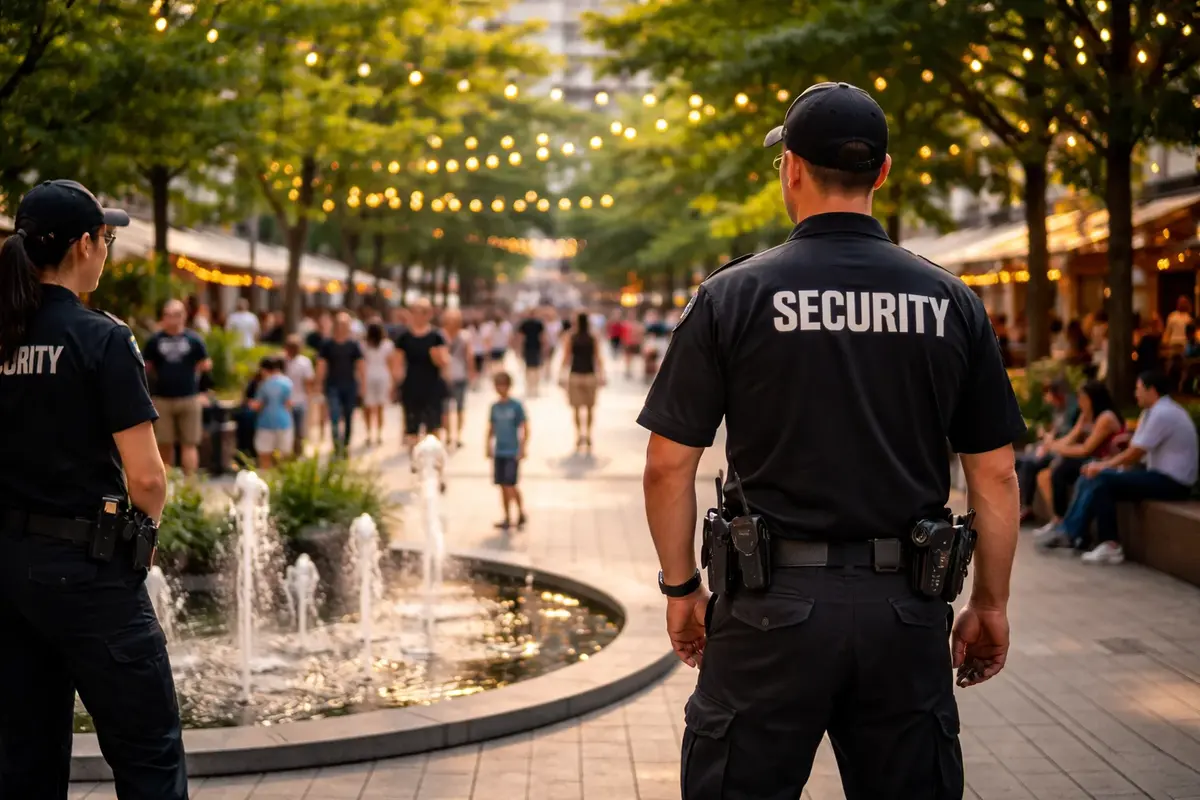
There’s something quietly reassuring about a well-lit street, a visible patrol, or a camera perched at just the right angle. In places like Grafton, where community life flows through parks, walkways, and public squares, that sense of safety matters more than ever.
Urban spaces are changing. Foot traffic is growing, events are getting bigger, and expectations around safety are rising. This is where public spaces security becomes more than just a background service; it becomes part of everyday life.
In regional spots like Grafton, and over in Coffs Harbour or Maclean, safety is about more than just protection. It’s really about comfort, building trust, and making sure the natural rhythm of our towns stays exactly as it should be.
Modern safety isn’t just a guard standing at a door. It’s a smart blend of tech, planning, and keeping your eyes open. Around Grafton and the nearby hubs, we’ve seen a steady shift toward making our communal areas feel welcoming and open while still being properly protected.
Why public spaces security needs local context
Public safety in Grafton doesn’t mirror Sydney or Brisbane, and treating it that way often leads to wasted budgets. Regional towns operate on different rhythms. Foot traffic clusters differently, peak hours shift depending on events, and public behaviour feels more familiar yet less predictable in certain pockets.
A big mistake is trying to force a city-style camera layout onto a country town. You see cameras in the obvious spots, but the quieter back alleys where things actually change after dark get missed. It gives people a false sense of security while leaving massive blind spots along the river or in dimly lit car parks.
Local knowledge often outperforms expensive systems. A seasoned security service team familiar with Grafton will notice patterns that data alone misses. That might be a recurring late-night gathering point or subtle shifts in weekend movement. Without that context, even well-funded public spaces security setups struggle to deliver consistent results.
Common weak points in open urban environments
Every town has its pressure points, and in Grafton, they’re rarely obvious at first glance. Open parks, transport zones, and shopping strips each carry their own vulnerabilities. The issue isn’t just visibility; it’s predictability. Spaces that appear calm during the day can behave very differently after sunset.
A common trap in public spaces security is thinking that if you can see everything, it’s safe. In truth, huge open spaces without a structured eye on them are actually harder to manage. Things happen faster, movement is unpredictable, and if there’s no one nearby to step in, response times just blow out.
People also forget about those in-between zones, the spots between a busy street and a quiet park. These are the places that attract trouble because they aren’t the main focus. Even a solid professional security service plan can miss the mark if these transition areas aren’t part of the conversation from day one.
Following proven safer urban design principles can help reduce these overlooked risks and create more secure, well-planned public environments.
How lighting decisions impact real safety outcomes
Lighting gets treated like a finishing touch when it should sit much higher in the hierarchy of public spaces security planning. Poor lighting doesn’t just reduce visibility; it changes behaviour. People avoid dim areas, which ironically creates isolated pockets where incidents are more likely to occur.
Grafton has seen improvements in this space, but inconsistencies still exist. Bright zones next to poorly lit pathways create contrast issues, making it harder for both cameras and human eyes to adjust quickly. That split-second delay matters more than most realize.
There’s a definite cost trap with lighting, too. Going for the cheapest lights usually means a nightmare of maintenance and high power bills later on. A smart lighting setup makes a security service much more effective and gives locals more confidence, making it a huge win for public spaces security.
Balancing surveillance tech with human presence
Technology has changed the game, but it hasn’t replaced the need for people. In fact, over-reliance on surveillance systems is one of the more common missteps in public spaces security. Cameras can observe, record, and alert, but they can’t intervene in real time without human support.
In Grafton, the spots that pair cameras with actual boots on the ground always do better. Having a visible professional security service around doesn’t just mean they’re there to pick up the pieces; it stops trouble before it starts. You just can’t get that same deterrent effect from a lens alone.
There’s also a behavioural layer. People respond differently when they know someone is physically present. It changes how spaces feel. The most effective public spaces security setups aren’t the ones with the most cameras; they’re the ones where technology and human presence work together without stepping on each other’s toes.
Traditional vs Modern Security Approaches
| Feature | Traditional Security | Modern Security Approach |
| Monitoring | Manual | AI-assisted |
| Response Time | Slower | Real-time alerts |
| Coverage | Limited | Wide and scalable |
| Cost Efficiency | Moderate | Long-term savings |
| Flexibility | Low | High |
Cost trade-offs in modern security service setups
We all have to watch the budget, but cutting corners on public spaces security rarely works out. You usually just end up paying for it later in higher maintenance or extra emergency call costs that could’ve been avoided with a bit of foresight.
One common issue involves underestimating operational costs. Installing a system is one thing. Running it efficiently is another. Monitoring, staffing, and upkeep quickly add layers of expense that aren’t always factored in from the start.
There’s also a tendency to overspend on high-end technology without investing in a reliable corporate security service to support it. That imbalance creates gaps. Equipment sits underutilized while response times lag. A balanced approach where infrastructure and personnel receive equal attention tends to deliver stronger outcomes in public spaces security.
Role of corporate security service in public zones
The presence of a corporate security service in public areas often goes unnoticed, and that’s usually a sign it’s working well. Their role isn’t always obvious, but it’s layered into the broader public spaces security framework across Grafton.
These teams really bridge the gap between the town and local businesses. Shopping strips and event spaces thrive on this kind of teamwork. Without it, it’s easy for people to say, “Not my job,” which is the last thing you want when things get busy.
There’s a real advantage to using a tailored corporate security service. They’re closer to what’s happening on the ground and can pivot much faster than a massive, rigid system. That flexibility is a quiet but huge asset when you’re trying to keep public spaces security consistent.
Comparing safety strategies across nearby regions
Grafton, Coffs Harbour, and Maclean each approach public spaces security a little differently, and those differences reveal what works and what doesn’t. Coffs Harbour, for instance, leans more heavily on surveillance due to higher tourist activity.
Grafton, on the other hand, balances technology with physical presence more effectively in certain zones. That hybrid approach often results in smoother operations, especially during local events where crowd behavior shifts quickly.
Maclean is a great example of how smaller scales work. There might be fewer gadgets, but the community awareness is much tighter. That neighborly eye plays a massive part in public spaces security, often making up for less tech. Every town is different, and there’s no one-size-fits-all fix.
Practical Strategies for Safer Public Spaces
Simple improvements often make the biggest difference.
- Install consistent lighting across all zones
- Avoid hidden corners and blind spots
- Use signage to guide behaviour.
- Schedule visible patrols during peak hours
- Combine human presence with technology
Insert image of well-lit public park at night here.
Future shifts shaping public safety in Grafton
Looking ahead, public spaces security in Grafton is likely to become more adaptive rather than more rigid. Static systems are slowly giving way to flexible setups that respond to changing conditions in real time.
There’s growing interest in integrating smarter monitoring tools with existing security service frameworks. Not to replace people, but to support faster decision-making. That shift could reduce response times and improve overall efficiency without dramatically increasing costs.
At the same time, expectations will continue to rise. People want spaces that feel open but secure, active but controlled. Meeting that balance won’t come from a single solution. It will come from layering strategies, technology, design, and human presence, all working together under the umbrella of effective public spaces security.
Conclusion
Keeping Grafton’s public spots safe isn’t an accident; it takes real planning. From where the lights go to how the staff is trained, every little bit counts. A balanced approach keeps the town safe without ruining that relaxed vibe we all love about living here.
Overlooking the small stuff, like where a camera points or how a team is trained, leads to big risks and even bigger bills later. A security service that’s actually built for our local needs works so much better than a generic box-ticking exercise. If you’re looking for practical ways to step up safety, contact us today to discuss a solution tailored to your specific requirements.
For businesses, councils, or property managers looking to improve safety outcomes, the next step isn’t necessarily bigger; it’s smarter. A tailored security service approach aligned with real local conditions will always outperform generic solutions.
Frequently Asked Questions
1. What is public spaces security, and why is it important?
Basically, public spaces security is all about the systems and people that keep our shared spaces safe. It helps keep a lid on crime and gives everyone the confidence to enjoy our parks and streets every day.
2. How does a corporate security service support public areas?
Using a corporate security service means you get structured monitoring and a team that actually knows what they’re doing. It’s the best way to handle risks in busy areas where a lot is going on at once.
3. What makes a professional security service different?
A true professional security service relies on great training and the right tools. The focus is always on stopping problems before they happen and keeping things safe without making everyone feel like they’re in a lockdown.
4. Which areas need public spaces security the most?
High-traffic areas like parks, shopping zones, transport hubs, and event spaces need strong public spaces security due to higher exposure to risks.
5. Is technology replacing human security roles?
Technology is a great helper, but it’s no match for human common sense. A professional security service puts both together to get the best result possible.